How Many Days Should You Allow in Whitehorse Before a Yukon Hunt?

For most fly-in Yukon hunting trips, arriving in Whitehorse two nights before your scheduled departure into camp is a sensible starting point. Three nights may be worthwhile if you have multiple connecting flights, separate airline bookings or specialized equipment that would be difficult to replace locally.
The same principle applies to the return journey. Leaving enough time between your scheduled departure from camp and your flight home can prevent an ordinary weather delay from becoming an expensive travel problem.
The Difference Between Hunt Dates and Travel Dates
A ten-day guided hunt rarely means ten days away from home. Commercial flights, accommodation in Whitehorse, transportation into the hunting concession and the return journey can easily turn it into a sixteen- or seventeen-day expedition.
The first step is to establish what your outfitter means by the hunt dates listed in your contract. Some packages count arrival and departure days separately, while others include transportation days within the overall booking period.
These extra days are easier to account for when you understand the full sequence involved in planning a fly-in Yukon hunting trip, from commercial flights to the final transfer into camp.
Commercial flights into Whitehorse
Erik Nielsen Whitehorse International Airport (YXY) is the main aviation gateway to the Yukon. Vancouver, Calgary and Edmonton are useful connection points for travellers arriving from elsewhere in Canada. Air North also operates services from other Canadian destinations, although routes and frequencies vary throughout the year.
Someone travelling from Vancouver may have a relatively straightforward itinerary. A hunter departing from a smaller community in Atlantic Canada, however, might need several connections before reaching Whitehorse.
When comparing flights, consider the availability of alternative departures rather than simply choosing the shortest itinerary. If your final connection is cancelled, the difference between another flight that afternoon and one the following day matters considerably.
Whenever possible, book connecting commercial flights on a single ticket. If you purchase separate tickets, confirm baggage transfer arrangements and understand what happens if a delay causes you to miss your next flight.
The final flight into the concession
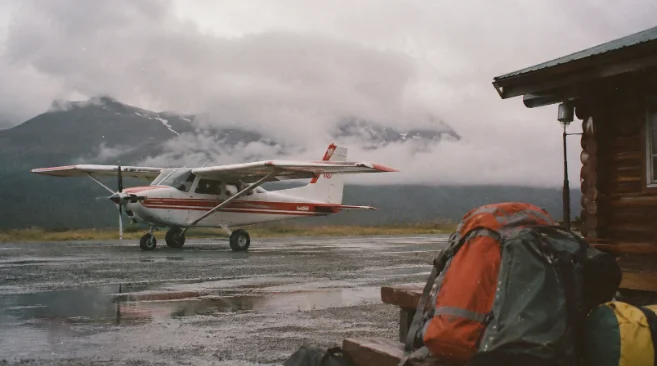
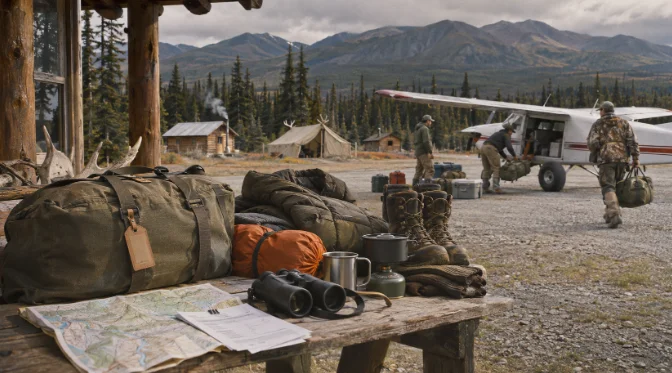
Your commercial flight into Whitehorse is only the first transportation stage. Depending on the outfitter, the next leg could involve a charter aircraft, a road transfer to another community or a combination of ground and air transportation.
These arrangements operate independently of your commercial airline schedule. A delayed passenger cannot necessarily expect a bush plane to wait, particularly when the outfitter is coordinating several clients, supplies and other camp movements.
Several Yukon outfitters recommend arriving approximately two days before the scheduled charter departure. This reflects the practical difficulty of reorganizing remote transportation at short notice.
Is One Day in Whitehorse Enough?
One night in Whitehorse can work under favourable circumstances, but it leaves little room for disruption. Two nights provide a more practical margin for most travellers, while three nights offer additional protection for complicated itineraries.
For planning purposes, count the nights between your arrival in Whitehorse and your departure into camp. Arriving on Monday evening for a Wednesday morning charter provides two nights in town and one complete day for preparations.
| Nights in Whitehorse | Suitable for | Main limitation |
|---|---|---|
| One night | Direct flights, early arrival and flexible camp transfers | Limited recovery time after a cancellation or baggage delay |
| Two nights | Most domestic travellers with straightforward itineraries | A lengthy disruption may still affect the charter |
| Three nights | Multiple connections, separate tickets or inflexible camp transfers | Higher accommodation costs and more time away from home |
When a single buffer night might work
A short stay may be reasonable if you have a direct morning flight, another viable departure later that day and an outfitter who explicitly accepts your arrival schedule.
The arrangement becomes less attractive if you arrive late in the evening before an early morning charter. On paper, you have an overnight buffer. In practice, you may have only a few hours to collect your luggage, reach your accommodation and prepare for departure.
Arriving a calendar day early does not automatically provide a meaningful travel margin.
Why two nights are often more practical
Two nights give you time to deal with delayed luggage, collect outstanding supplies, review documents and get some proper rest before travelling into the wilderness.
The additional day also provides an opportunity to meet your outfitter, confirm transportation arrangements and resolve questions about equipment without rushing.
If everything arrives on schedule, Whitehorse is hardly an unpleasant place to spend a day. The Yukon River waterfront offers an opportunity for a relaxed walk, while local museums introduce visitors to the territory’s transportation history, Indigenous heritage and northern settlement.
Keep any sightseeing plans flexible enough to accommodate changes to your departure schedule. A short afternoon outing is generally easier to rearrange than a full-day excursion outside the city.
When three nights may be worth allowing
Consider a longer buffer when your itinerary involves multiple connections, infrequent regional flights or equipment that would be particularly difficult to replace.
Three nights may also make sense if missing the scheduled charter would require an expensive private transfer or cause you to lose part of your booked hunting time.
Seasonality matters as well. Later autumn hunts can encounter colder conditions, shorter daylight hours and early snowfall, although weather disruptions are possible throughout the hunting season.
The financial comparison is straightforward: weigh the cost of an additional hotel night and meals against the potential expense of replacement transportation and missed days on an already costly expedition.
For a premium guided hunt, an extra night in Whitehorse can be relatively inexpensive protection.
A Sample Travel Calendar for a 10-Day Yukon Hunt
The following itinerary assumes ten complete hunting days, separate transportation days and a fly-in camp reached through Whitehorse.
| Day | Activity |
|---|---|
| 1 | Arrive in Whitehorse |
| 2 | Buffer day, rest and final preparations |
| 3 | Scheduled transfer into camp |
| 4–13 | Ten scheduled hunting days |
| 14 | Scheduled return from camp |
| 15–16 | Return travel buffer |
| 17 | Commercial flight home |
This example turns a ten-day hunt into a seventeen-day trip. It provides two nights in Whitehorse before the charter and two complete contingency days following the scheduled return from camp.
If your outfitter includes transportation within the ten-day package, your itinerary will look different. Similarly, travellers who cannot reach Whitehorse in a single day may need additional time at the beginning of the journey.
The distinction is particularly relevant when arranging vacation time from work. Booking exactly two weeks off for a ten-day hunt may leave insufficient time for transportation, recovery and unexpected delays.
Confirm the actual camp transfer dates before booking flights or finalizing your other arrangements.
What Happens When Your Luggage Arrives Late?
Delayed baggage is especially disruptive on a wilderness expedition. Missing clothing on an ordinary city break is inconvenient; missing properly fitted boots or essential outdoor equipment immediately before leaving for a remote camp is a much bigger problem.
If your checked luggage does not arrive, report it to the airline before leaving the airport. Obtain a baggage reference number, confirm delivery arrangements and notify your outfitter promptly.
Keep receipts for necessary replacement purchases and submit any claim within the applicable deadline. The Canadian Transportation Agency provides guidance on delayed baggage, airline responsibilities and passenger complaints.
Essentials to keep with you
Where airline and aviation security rules permit, your carry-on luggage should contain items that are difficult to replace or essential to your immediate needs:
- Identification, travel documents and hunting-related paperwork.
- Prescription medication in sufficient quantities.
- Prescription glasses or contact lenses.
- A change of clothing and essential base layers.
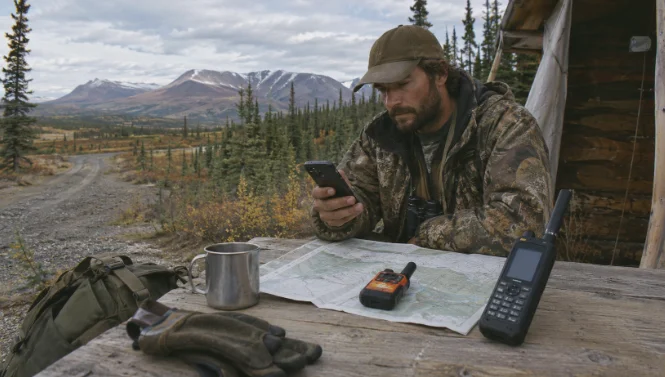
- Your phone, charging cable and necessary travel accessories.
- Outfitter contact information and copies of your itinerary.
- Essential personal items that cannot easily be replaced.
Consider wearing your broken-in outdoor boots during commercial travel rather than packing them in checked luggage. Replacing a jacket is generally easier than finding unfamiliar footwear that will remain comfortable throughout a demanding backcountry trip.
Questions to ask your outfitter
Before departure, establish whether your outfitter can accommodate delayed equipment.
Ask whether replacement items are available, whether transportation can be rescheduled and who would pay for an additional transfer if you miss the original departure.
Do not assume that luggage arriving after you leave Whitehorse can simply be forwarded into camp. Depending on the location, getting it to you could require another aircraft movement.
It is also useful to know which supplies can realistically be purchased in Whitehorse and which specialized items should be treated as irreplaceable for the purposes of your trip.
Planning the Return Journey
The return journey deserves at least as much flexibility as the outbound trip. Once you are in a remote concession, changing your commercial flight may be difficult because of limited communications and uncertainty about your extraction date.
Weather delays leaving camp
Low cloud, poor visibility, strong winds and deteriorating autumn weather can interrupt remote aviation. Conditions in Whitehorse may be perfectly acceptable while weather elsewhere prevents a scheduled camp pickup.
Allowing two complete days between your expected return to Whitehorse and your commercial departure is a reasonable starting point, particularly for remote fly-in expeditions. Consider a longer margin if your outfitter identifies additional transportation risks.
If you find yourself with an extra day in town or an extended stay in camp, making good use of unexpected downtime can help you stay rested and prepared without complicating the rest of your journey.
An unplanned afternoon in Whitehorse is generally preferable to missing a flight home.
Flexible tickets and additional accommodation
A flexible return ticket may be more valuable than a flexible outbound ticket because your exact return from the wilderness is harder to control.
Compare fare conditions carefully. A ticket advertised as having no change fee may still require payment of a fare difference. Check cancellation terms, no-show conditions and whether someone can amend your reservation on your behalf.
Canada’s Air Passenger Protection Regulations establish certain airline obligations when commercial flights are disrupted. However, weather-related disruptions outside an airline’s control do not generally qualify for compensation for inconvenience, and hotel or meal assistance is not automatically required.
Nor should you assume that an airline will cover a missed commercial flight because your independently arranged bush charter was delayed.
For accommodation, look for reasonable cancellation conditions and maintain a separate contingency reserve for additional hotel nights, meals and transportation.
When reviewing travel insurance, check whether the policy covers missed departures or trip interruptions arising from delays involving separately arranged remote transportation.
Before You Book Your Flights
Confirm the following details with your outfitter before committing to non-refundable travel arrangements:
- The exact date and time you must arrive in Whitehorse.
- Whether your contract includes camp transportation days.
- The location of your initial meeting and scheduled departure.
- The expected date of your return from camp.
- Recommended arrival and departure buffers.
- Procedures for delayed commercial flights or missing baggage.
- Responsibility for additional charter and accommodation expenses.
- Emergency contact details and arrangements for changing return flights.
- Baggage storage options for items that will remain in Whitehorse.
Check your itinerary using Yukon local time, particularly if you are travelling across several Canadian time zones. The territory observes UTC−7 throughout the year, which means its time difference from some other Canadian destinations changes seasonally.
The most useful travel buffer is not necessarily the longest one. It is the one that gives you enough flexibility to recover from a realistic disruption without sacrificing hunting days or facing substantial additional costs.
For most travellers, two nights before entering camp and two full contingency days after the scheduled return provide a practical starting point. Adjust that margin to suit your route, season and outfitter’s arrangements. When you have invested considerable time and money preparing for a Yukon hunt, a little extra time in Whitehorse is rarely the part of the journey worth cutting short.