How to Pack for a Yukon Fly-In Hunt Without Exceeding Bush Plane Weight Limits

Packing for a Yukon fly-in hunt is different from preparing for a road-accessible hunting trip. Everything you bring must fit inside a relatively small aircraft, alongside passengers, fuel and supplies destined for a remote wilderness camp.
Some Yukon outfitters limit personal hunting gear to approximately 27 kg (60 lb), while others allow more depending on the season, aircraft and type of expedition. The most reliable approach is to establish your actual baggage allowance before buying equipment, build a realistic weight budget and prioritize the items you genuinely need in the backcountry.
Why Packing for a Bush Plane Is Different
A commercial airline’s baggage allowance tells you how much luggage you can take to Whitehorse. It does not necessarily tell you how much equipment you can bring into a remote hunting concession.
Understanding how the journey into a remote Yukon camp works helps explain why the baggage allowance on your first flight may have little bearing on what you can take into the backcountry.
Commercial airline allowances versus charter limits
Commercial airlines generally establish baggage allowances according to aircraft type, route and ticket conditions. Air North, for example, publishes a standard checked baggage allowance of 23 kg (50 lb) per item on its southern routes, while certain northern services have considerably lower limits.
A bush plane operates under different constraints. Even if you arrive in Whitehorse with two checked bags that meet your airline’s requirements, your outfitter may permit only a fraction of that combined weight on the next flight.
Published equipment lists from Yukon outfitters illustrate these differences. Mervyn’s Yukon Outfitting specifies a maximum gear weight of 60 lb, or approximately 27 kg. Yukon Stone & Moose Creek Outfitters provides different weight guidelines for sheep hunts and later-season mixed-species hunts.
These are examples of individual outfitter policies, not territory-wide baggage allowances.
Why every aircraft and trip may have different limits
The amount of equipment a small aircraft can safely transport depends on several factors, including:
- Aircraft type and configuration.
- Passenger weights.
- Fuel requirements.
- Cargo weight and distribution.
- Departure and destination conditions.
- Other equipment and supplies being transported.
Aircraft loading must comply with applicable weight and balance requirements. The operator and pilot determine whether a particular load can be carried safely.
Unlike commercial airline excess baggage, where an additional fee may resolve the problem, overweight equipment on a bush flight may simply have to remain behind.
Confirm Your Actual Weight Allowance Before Buying Gear
An outfitter’s equipment list should be the starting point for your preparations. However, a list of recommended clothing and equipment is not necessarily a complete explanation of how your baggage allowance is calculated.
Before purchasing anything, request written confirmation of the permitted weight, bag dimensions and any restrictions specific to your expedition.
What counts towards your baggage limit?
One of the easiest mistakes is to weigh the main duffel bag while overlooking everything else.
Your personal equipment allowance may include your backpack, footwear, electronics, personal accessories and the weight of the bags themselves. Certain specialized items may be subject to separate arrangements.
Ask your outfitter whether the stated allowance includes all personal equipment or whether particular items are handled separately. Also establish whether supplies provided by the outfitter are already accounted for in the transportation plan.
Do not assume that wearing heavier clothing or carrying equipment separately exempts it from aircraft loading requirements. Passenger and baggage weights must still be accounted for.
Are weight and size treated separately?
A bag can meet the weight allowance and still be unsuitable for a small aircraft.
Rigid suitcases, oversized wheeled luggage and bulky equipment cases may be difficult to accommodate within limited cargo compartments. Many outfitters prefer soft-sided duffel bags because their shape can adapt more readily to available storage space.
When comparing expedition bags, pay attention to empty weight, external dimensions, handle placement and the presence of rigid frames or wheels.
A lightweight duffel with sturdy handles and a simple carrying system may be more practical than a sophisticated travel bag that consumes several kilograms of your allowance before anything has been packed.
Confirm the preferred bag dimensions with your outfitter rather than relying on a manufacturer’s general travel recommendations.
Building a Practical Gear Weight Budget
The easiest way to manage a restricted baggage allowance is to divide it into categories before packing.
Rather than filling a duffel and discovering that it is overweight, assign a maximum weight to each group of equipment. This makes it easier to identify unnecessary items without compromising essential clothing or personal safety.
The following example illustrates how someone might organize a confirmed 27 kg personal gear allowance.
| Gear category | Example weight allowance |
|---|---|
| Clothing and rain protection | 6 kg |
| Sleeping equipment | 3 kg |
| Footwear and accessories | 3 kg |
| Packs and bags | 3 kg |
| Optics and electronics | 3 kg |
| Hygiene and personal essentials | 2 kg |
| Other outfitter-approved equipment | 5 kg |
| Unallocated weight reserve | 2 kg |
| Total | 27 kg |
This is an illustrative planning budget, not a universal Yukon fly-in hunting packing list. Individual requirements will vary depending on the season, accommodation and equipment supplied by your outfitter.
The unallocated reserve is particularly useful. Small items such as charging cables, toiletries, gloves and personal accessories accumulate weight surprisingly quickly.
If you aim for exactly 27 kg during your initial packing session, there is little flexibility when you remember something important later. A target of approximately 25 kg of packed equipment provides a modest margin within this example allowance.
Reduce weight without sacrificing essential equipment
Start by identifying duplication rather than immediately replacing equipment with expensive ultralight alternatives.
Three changes of casual clothing, several pairs of spare footwear and multiple charging systems can consume valuable space without contributing much to your comfort in camp.
Before packing an item, consider three questions: Is it necessary for the conditions you expect? Does another item already perform the same function? Will the outfitter provide it?
Removing unnecessary duplication is often more effective than spending hundreds of dollars to save a few hundred grams on essential equipment.
What Deserves Space in Your Bag?
A restricted baggage allowance requires priorities. Essential protection from the elements, medical needs and required personal equipment should come before convenience items.
Weather protection and essential clothing
Yukon weather can change considerably over the course of a single day. Even during August, remote mountain areas can experience cold temperatures, strong winds and prolonged rain.
A practical clothing system should include moisture-managing base layers, insulating layers and reliable protection from wind and precipitation. Warm gloves, appropriate headwear and sufficient socks deserve particular attention.
Rather than packing a completely different outfit for every possible weather condition, choose compatible layers that can be worn in different combinations.
The exact clothing requirements will depend on your outfitter’s location, anticipated conditions and accommodation arrangements. A sheltered base camp in early autumn presents different requirements from a remote alpine camp later in the season.
Footwear is another area where saving weight should not come at the expense of suitability. Properly fitted, broken-in boots and appropriate socks are difficult to replace once you are in a remote camp.
Personal essentials and communication equipment
Personal medication, identification, prescription eyewear and essential travel documents should receive priority.
Keep enough medication for the scheduled duration of your expedition and discuss appropriate contingency supplies with your healthcare provider, particularly when weather could delay your return.
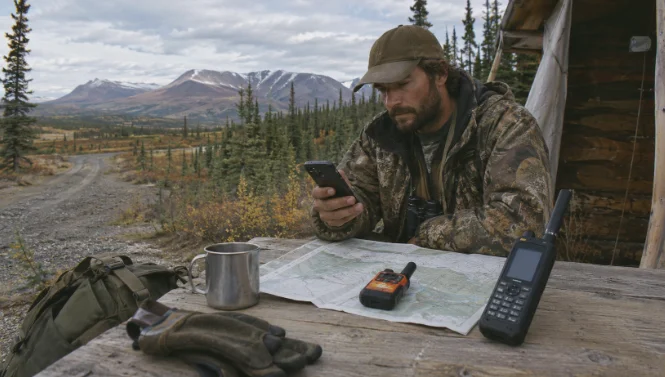
Electronic equipment also deserves careful consideration. Smartphones, satellite communication devices, headlamps and charging equipment may serve useful functions, but their value depends on the arrangements at your destination.
Before packing several power banks, spare batteries and charging cables, establish whether electricity is available in camp and what communication equipment your outfitter supplies.
What your outfitter may already provide
Many guided expeditions include communal equipment that clients do not need to transport individually.
Depending on the camp, this may include sleeping arrangements, cooking equipment, meals, water treatment equipment and certain emergency communication systems.
However, facilities vary considerably between established base camps and temporary spike camps. Never assume that an item is provided simply because it was included on another guided expedition.
Confirm what is supplied before removing anything from your equipment list. This can prevent unnecessary duplication while ensuring that genuinely essential items are not left behind.
What Can Stay in Whitehorse?
Packing separately for commercial travel and the wilderness portion of your trip can make a substantial difference to your baggage weight.
Think of Whitehorse as the transition point between two different environments. Equipment suitable for airports, hotels and the journey home may have little practical value in a remote camp.
Town clothing and return travel essentials
A clean set of clothes for your return flight, casual footwear and additional toiletries can usually remain in town if suitable storage arrangements are available.
Keeping these items separate also means you have something clean and comfortable to wear when you return from an extended wilderness expedition.
There is little reason to carry an entire wardrobe into camp when most of it will only be used after the trip.
Extra luggage and unnecessary electronics
Large wheeled suitcases, laptops, additional camera accessories and entertainment devices should be assessed according to their usefulness at the destination.
A tablet might be convenient during commercial travel, for example, but considerably less useful at a camp with limited electricity.
For quiet evenings, a paperback book, a small notebook or downloaded audio on a device you are already bringing may provide sufficient entertainment without adding much weight.
Arranging secure luggage storage
Some outfitters coordinate luggage storage through accommodation providers in Whitehorse. Others expect clients to make their own arrangements.
Confirm availability before departure, including any storage charges, access restrictions and arrangements for collecting your belongings if your return date changes.
Valuables, sensitive documents and regulated equipment should only be stored under appropriate, approved conditions. Do not assume that ordinary hotel luggage storage is suitable for every item.
Packing Electronics and Batteries for the Flight
Battery-powered equipment introduces additional considerations when travelling through Canadian airports and aboard remote charter aircraft.
The Canadian Air Transport Security Authority (CATSA) and Transport Canada provide guidance on travelling with lithium batteries and portable electronic devices. Airlines may also impose additional restrictions.
For your commercial flight, keep power banks and spare lithium batteries in carry-on baggage, protect battery terminals against short circuits and check the permitted watt-hour ratings.
Power banks rated at 100 Wh or less are generally accepted, subject to applicable quantity restrictions and airline policies. Larger units may face additional restrictions or be prohibited. Do not assume that approval rules for other lithium batteries also apply to power banks.
Avoid travelling with damaged, defective or recalled batteries. Check the current requirements before departure, particularly if you intend to bring high-capacity charging equipment.
The rules for your final charter flight also need to be confirmed separately. Some small aircraft do not have conventional passenger baggage compartments, so the operator must determine how permitted equipment can be transported safely.
When choosing charging equipment, consider the actual needs of your approved devices rather than bringing the largest available power bank.
The Final Packing and Weighing Checklist
Complete your first full packing session several weeks before departure. This gives you time to resolve equipment problems and make necessary adjustments without last-minute purchases.
- Obtain your outfitter’s current equipment list.
- Confirm the total personal baggage allowance in kilograms or pounds.
- Verify bag dimensions and restrictions on rigid luggage.
- Establish which equipment and supplies are provided in camp.
- Separate commercial travel belongings from wilderness equipment.
- Check the applicable airline and charter restrictions on batteries and regulated items.
- Weigh each equipment category individually.
- Pack everything into the bags you intend to use.
- Weigh the complete luggage, including backpacks, accessories and other items.
- Leave a modest margin below the confirmed allowance.
- Arrange secure storage for belongings that will remain in Whitehorse.
- Recheck your luggage weight before departing for camp.
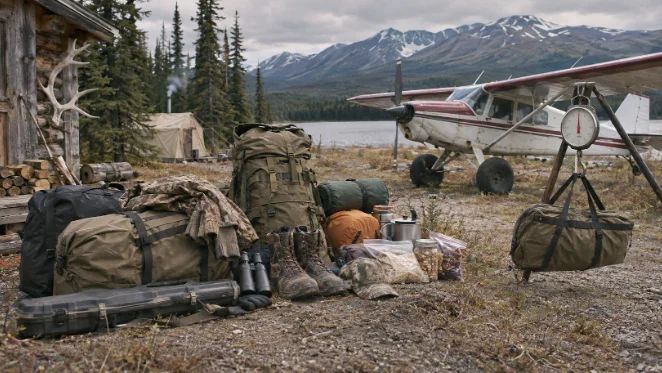
A household luggage scale is useful for preparation, but the operator’s measurements and loading decisions take precedence.
The objective is not to bring as much equipment as the aircraft will permit. It is to arrive with everything you need, nothing unnecessary and enough flexibility to accommodate the realities of remote transportation.
A carefully organized 25 kg of essential equipment can be more useful than a heavier collection of poorly chosen gear. In the Yukon backcountry, the value of an item is measured by what it contributes to your expedition, not simply by how much space you have left in your bag.